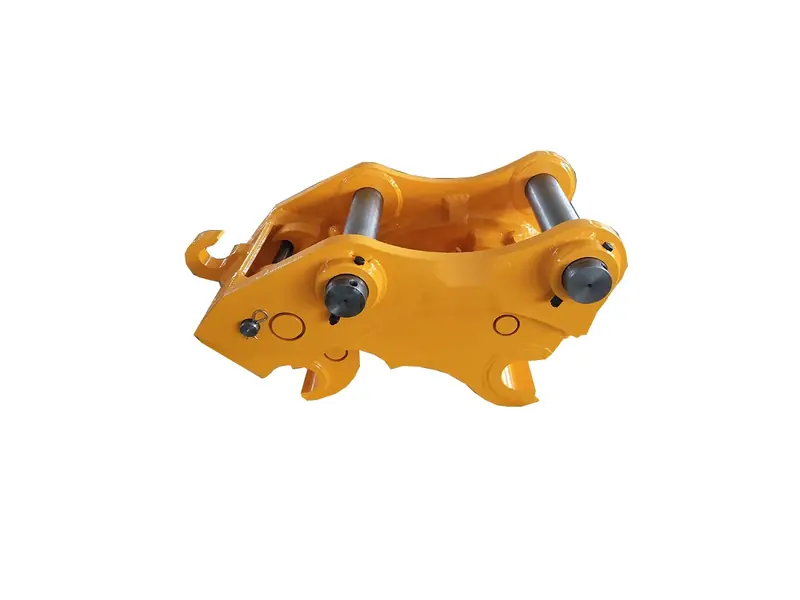
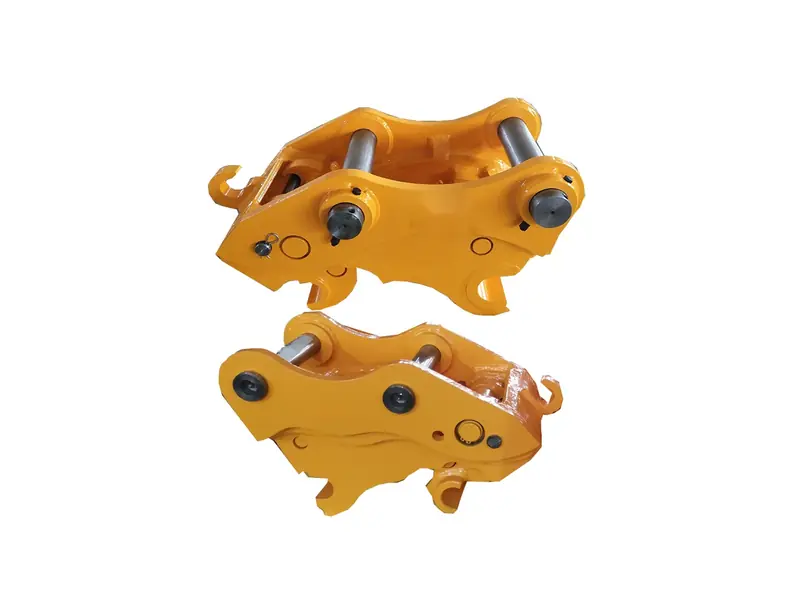
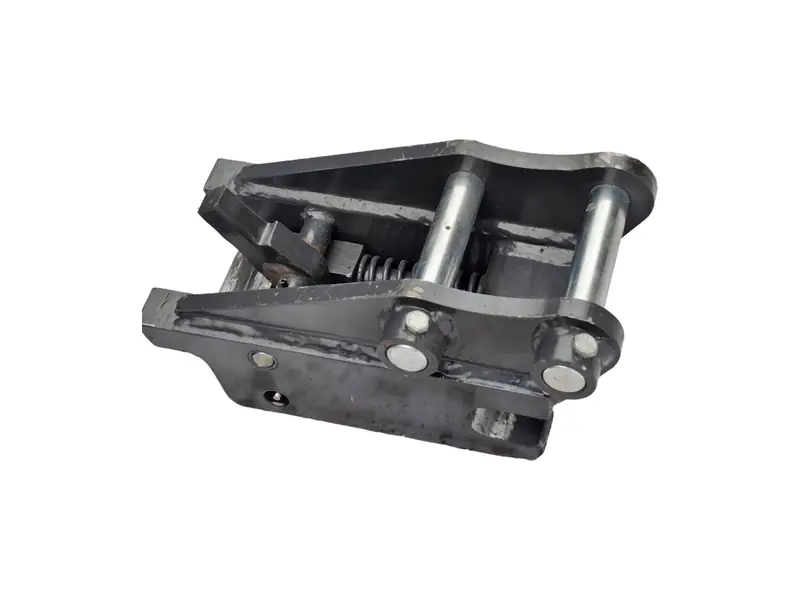
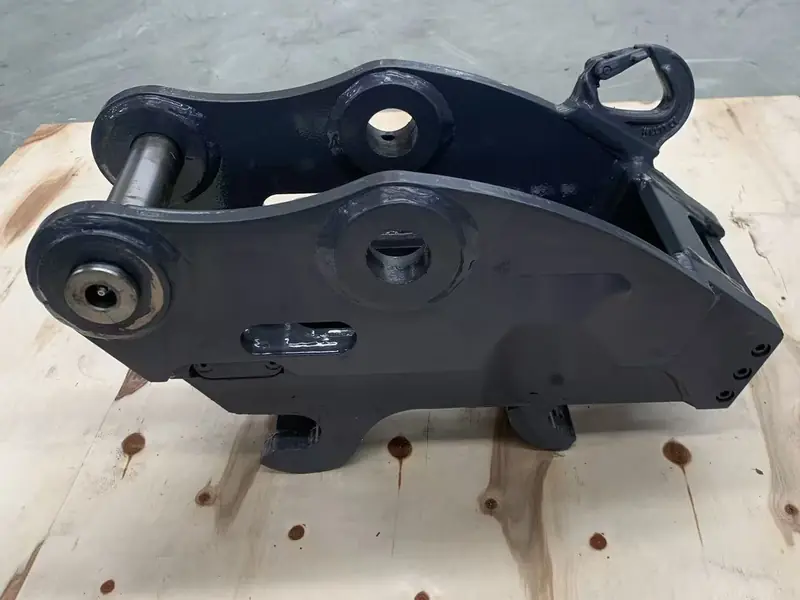
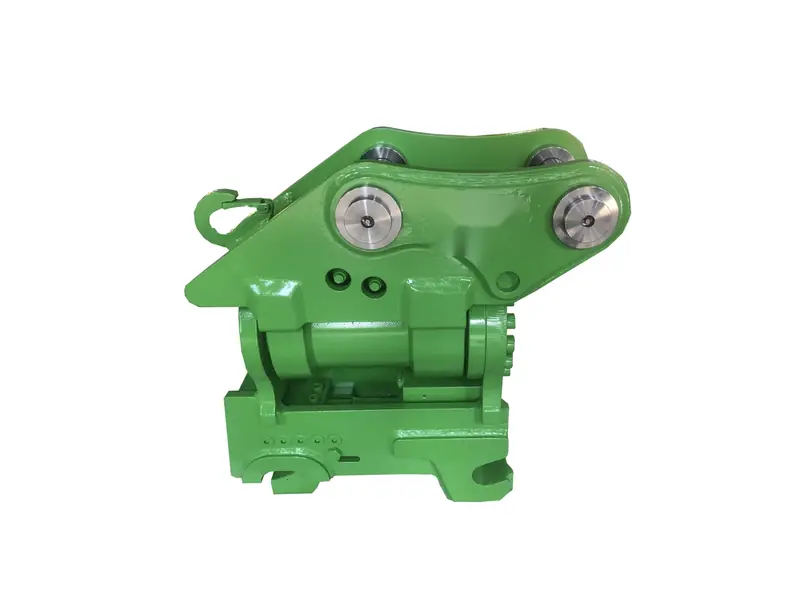
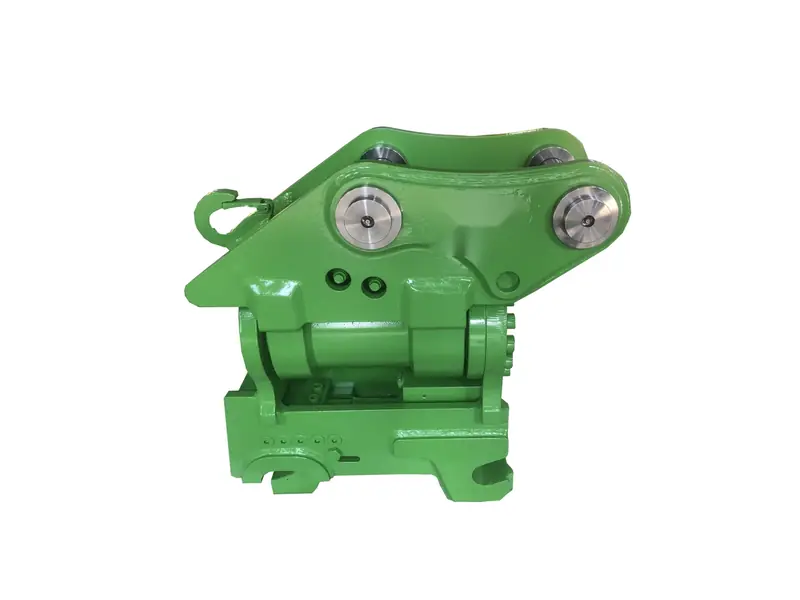
Short answerA hydraulic quick coupler is operated from the cab and changes attachments in seconds, but needs a solenoid valve, hydraulic line and wiring. A mechanical quick coupler uses a manual screw or spring lock, needs no hydraulics and costs less, but changes take a few minutes. Choose hydraulic for frequent changes and fleets, mechanical for occasional changes and budget retrofits.
What a quick coupler does
A quick coupler (quick hitch) sits between the excavator arm and the attachment. Instead of knocking out pins, the operator releases one attachment and picks up the next. On a busy site this can save hours each week.
Hydraulic vs mechanical at a glance
| Hydraulic | Mechanical | |
|---|---|---|
| Change time | Seconds, from the cab | 2–5 minutes |
| Installation | Solenoid, hoses, switch, wiring | Bolt-on, no hydraulics |
| Safety | Check valve + mechanical pin | Wedge + safety pin |
| Maintenance | Hoses and cylinder seals | Grease points only |
| Cost | Higher | Lower |
Safety is not optional
Whichever type you choose, insist on a secondary lock. Our hydraulic couplers combine a pilot-operated check valve with a mechanical safety pin, and the in-cab buzzer warns when the coupler is open.
How to measure for a coupler
- Pin diameter (mm) of the bucket pins.
- Pin-to-pin centre distance.
- Inside width between the bucket ears.
- Arm (stick) width at the bucket pin.
Send these through our contact form and we will return a drawing before production.
What about tilt hitches and tiltrotators?
A tilt quick hitch adds ±90° tilt, and a tiltrotator adds 360° rotation. Both include a quick coupler, so they combine speed of change with precision grading.