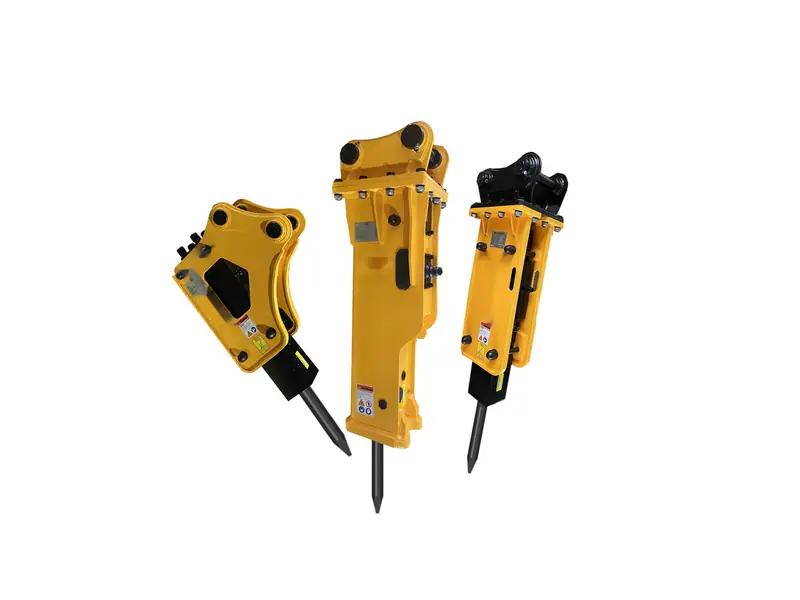
Same heart, different housing
All three designs can share the same power cell – piston, cylinder, valve and accumulator. What changes is how the cell is mounted and protected. That determines noise, weight, service access and how force reaches the work.
Side-by-side comparison
| Side type | Top type | Box (silenced) | |
|---|---|---|---|
| Noise | Higher | Higher | Lowest |
| Weight | Lightest | Light | Heaviest |
| Cell protection | Basic | Basic | Full housing |
| Chisel visibility | Excellent | Good | Good |
| Best for | General work, trenching | Vertical, pits, mining | Urban, tunnels, rental |
| Price | Lowest | Medium | Higher |
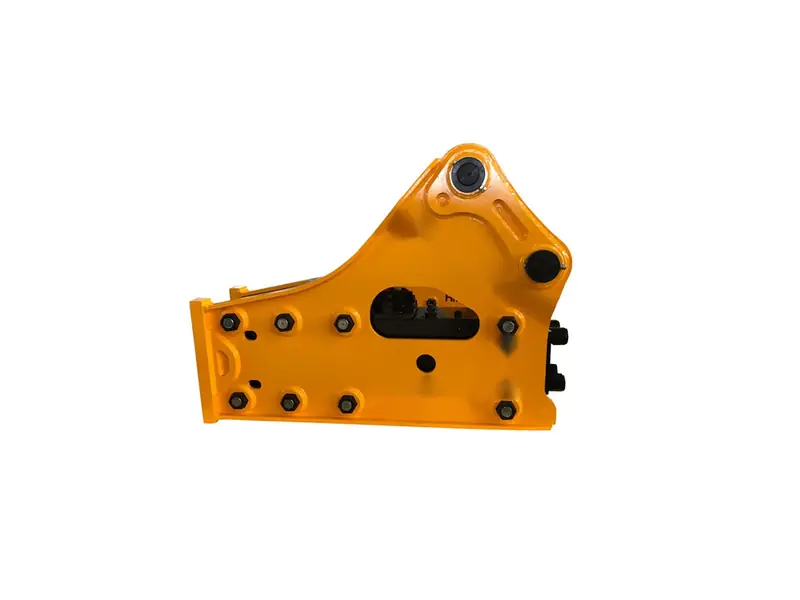
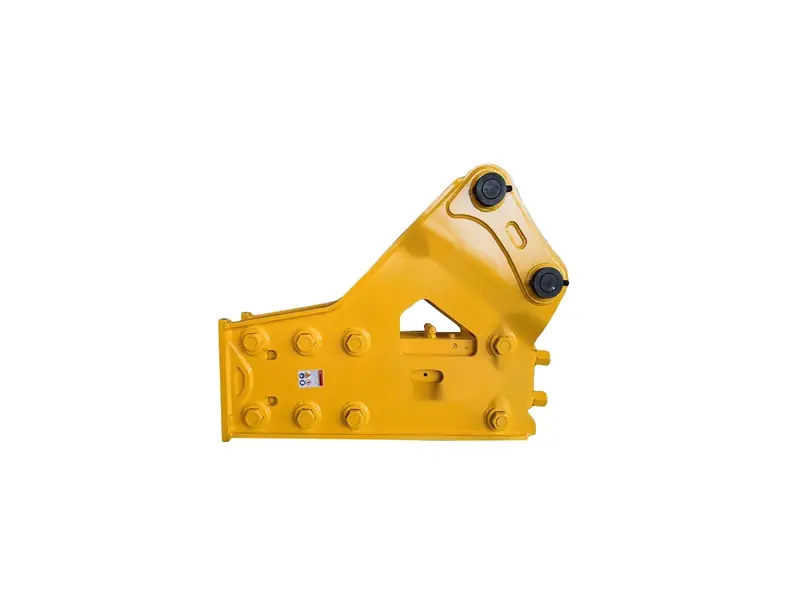
When to choose a side-type breaker
Side type keeps the hammer short and close to the arm. Operators see the chisel tip clearly, service is simple and the purchase price is lowest. It is the default choice for owner-operators and contractors doing trenching, foundations and road repair.
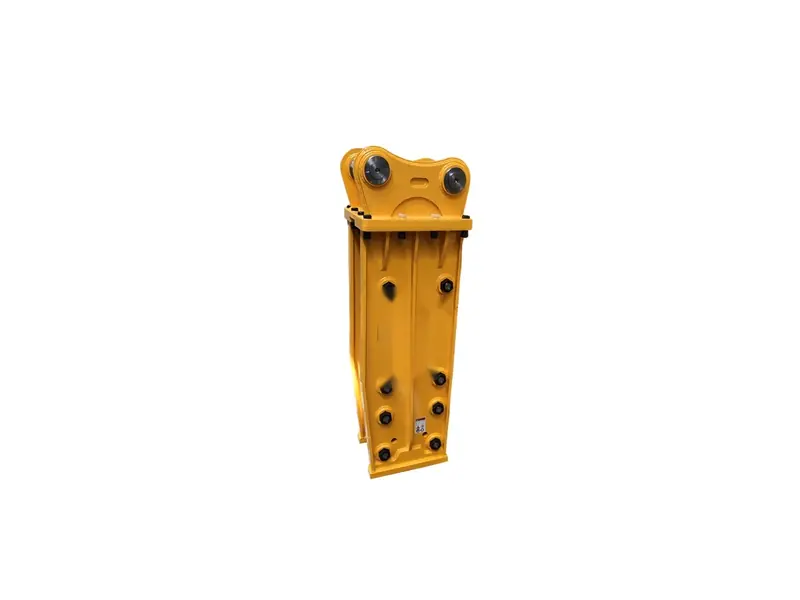
When to choose a top-type breaker
With the bracket on top, the hammer hangs in line with the arm. Force goes straight down the chisel, ideal for pits, bench breaking in mines and working below the tracks.
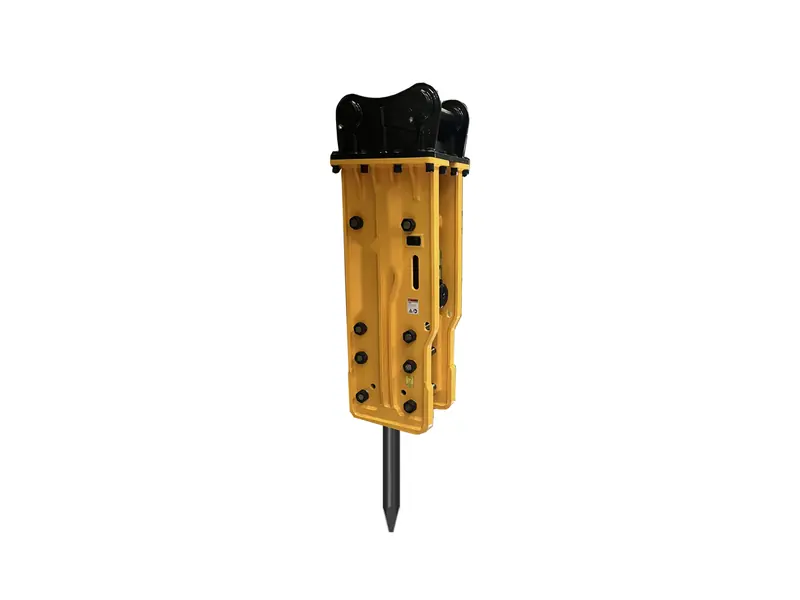
When to choose a box (silenced) breaker
The enclosed housing with dampers lowers noise and shields the power cell from rock impact. Many urban tenders and rental fleets specify box breakers because the housing is a replaceable wear part that protects the expensive core.
Our recommendation
If you work in cities or rent machines out, choose box type. If most work is vertical in pits or mining benches, choose top type. For everything else, a side-type breaker gives the best value. Browse the full breaker range or ask us to size one for your machine.